01
Sense
The system records an evoked spinal-cord response after a stimulation pulse.

Spinal cord stimulation
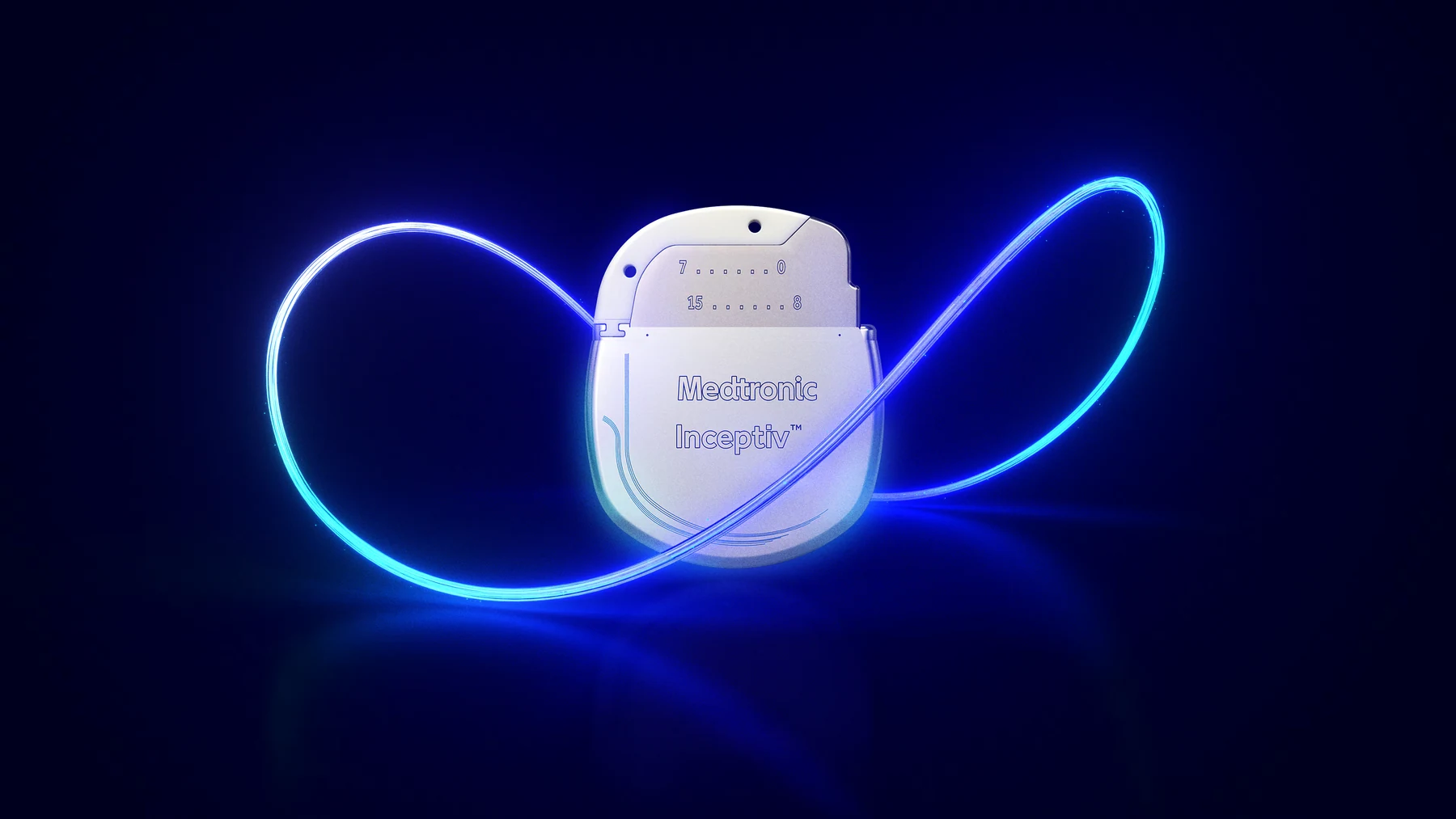
Medtronic's Inceptiv system measures the spinal cord's evoked electrical response after stimulation and can adjust the next pulse within clinician-programmed limits. The portfolio also includes rechargeable Intellis Pro, recharge-free Vanta, and Differential Target Multiplexed (DTM) therapy.
At a glance
Closed-loop sensing with conditional full-body MRI access, plus the DTM waveform.
Inside the Feedback Loop
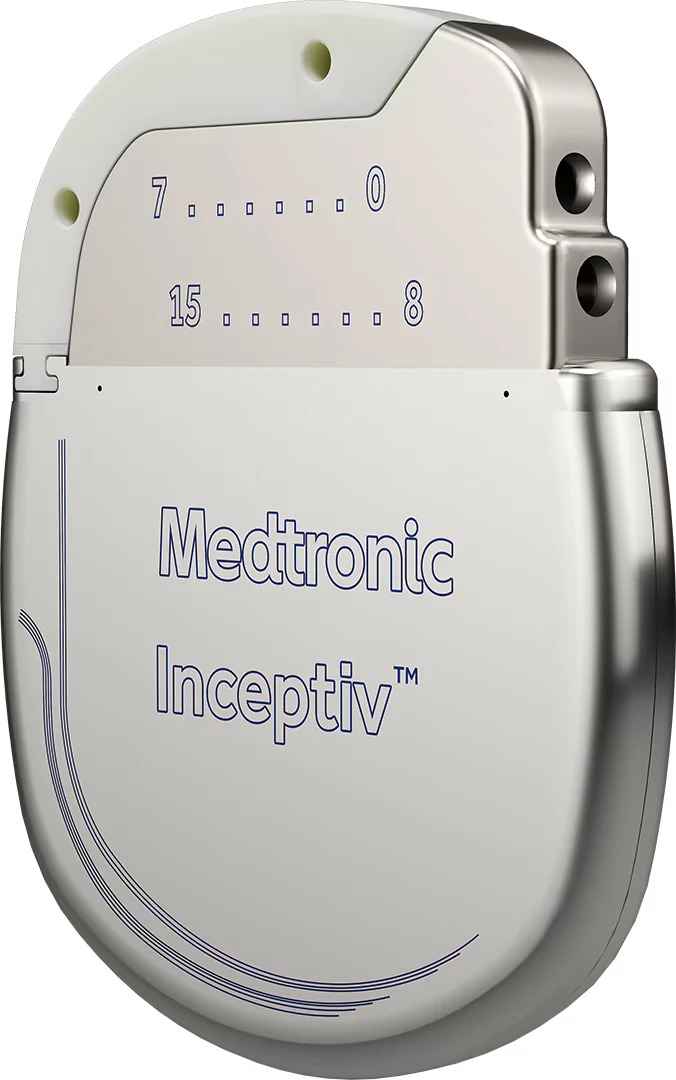
Inceptiv's closed-loop mode uses the spinal cord's evoked electrical response as feedback. It is a measurement of neural activation—not a direct measurement of pain—and it operates only within settings established by the treating clinician.
The system records an evoked spinal-cord response after a stimulation pulse.
That measured response is compared with the range programmed by the clinician.
The next pulse can be adjusted within those prescribed limits as conditions change.
Inceptiv closed-loop SCS
The device can also operate in fixed-output mode; closed-loop sensing is an available setting, not a promise of a particular outcome.
Programming & Daily Use
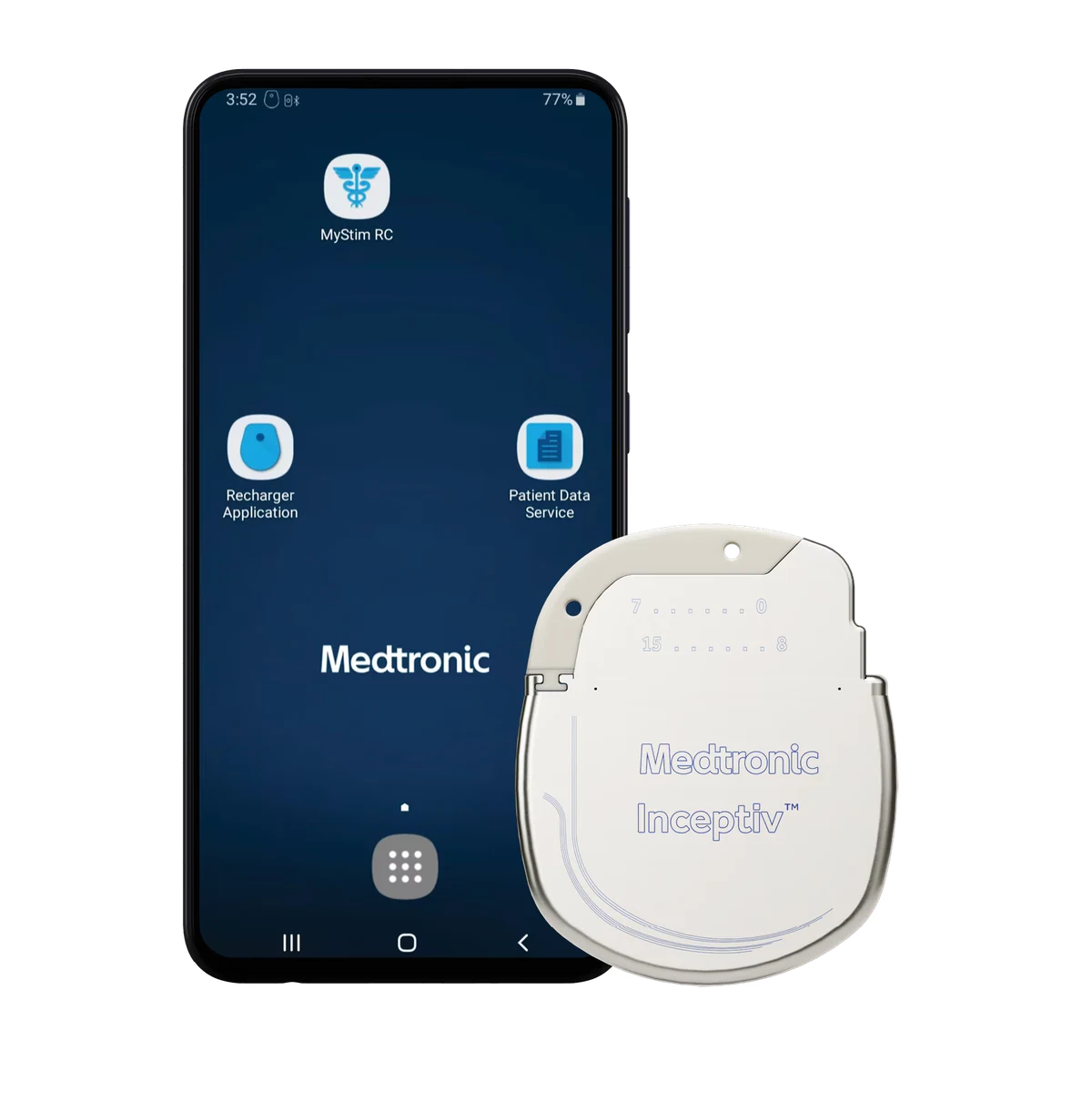
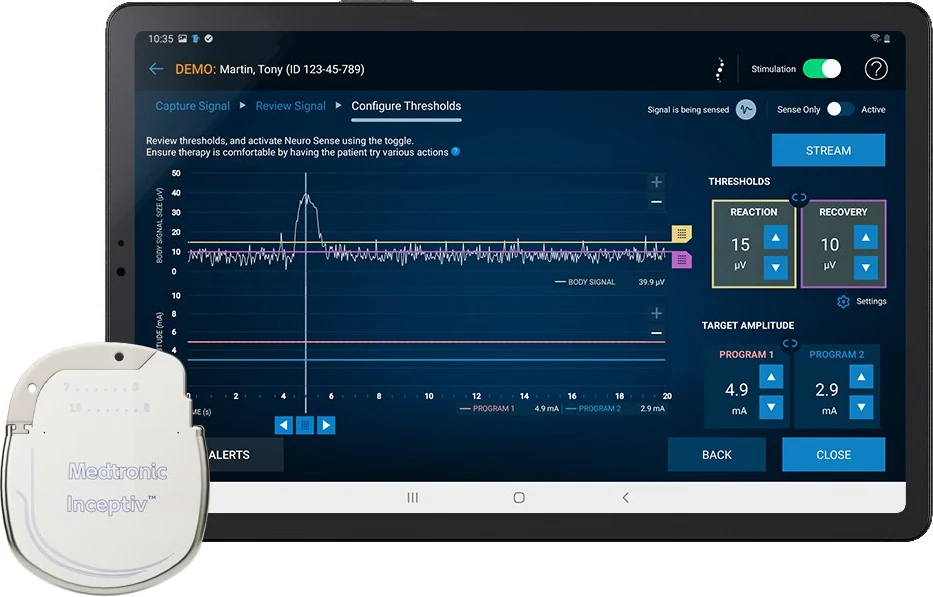
The patient and clinician views are intentionally different. One supports everyday use within prescribed limits; the other gives the care team detailed programming and response information.
Patient interface
The supplied image pairs Inceptiv with a smartphone-based patient interface. The exact controls available depend on the programmed therapy and current system setup.
Clinician interface
The manufacturer-supplied demonstration screen shows signal review and threshold controls used by the clinical team; it is not a patient-facing screen.
Around the Implant Journey
The implanted generator is only one part of an SCS pathway. Medtronic also supplied artwork for technology used around trialing and implantation.
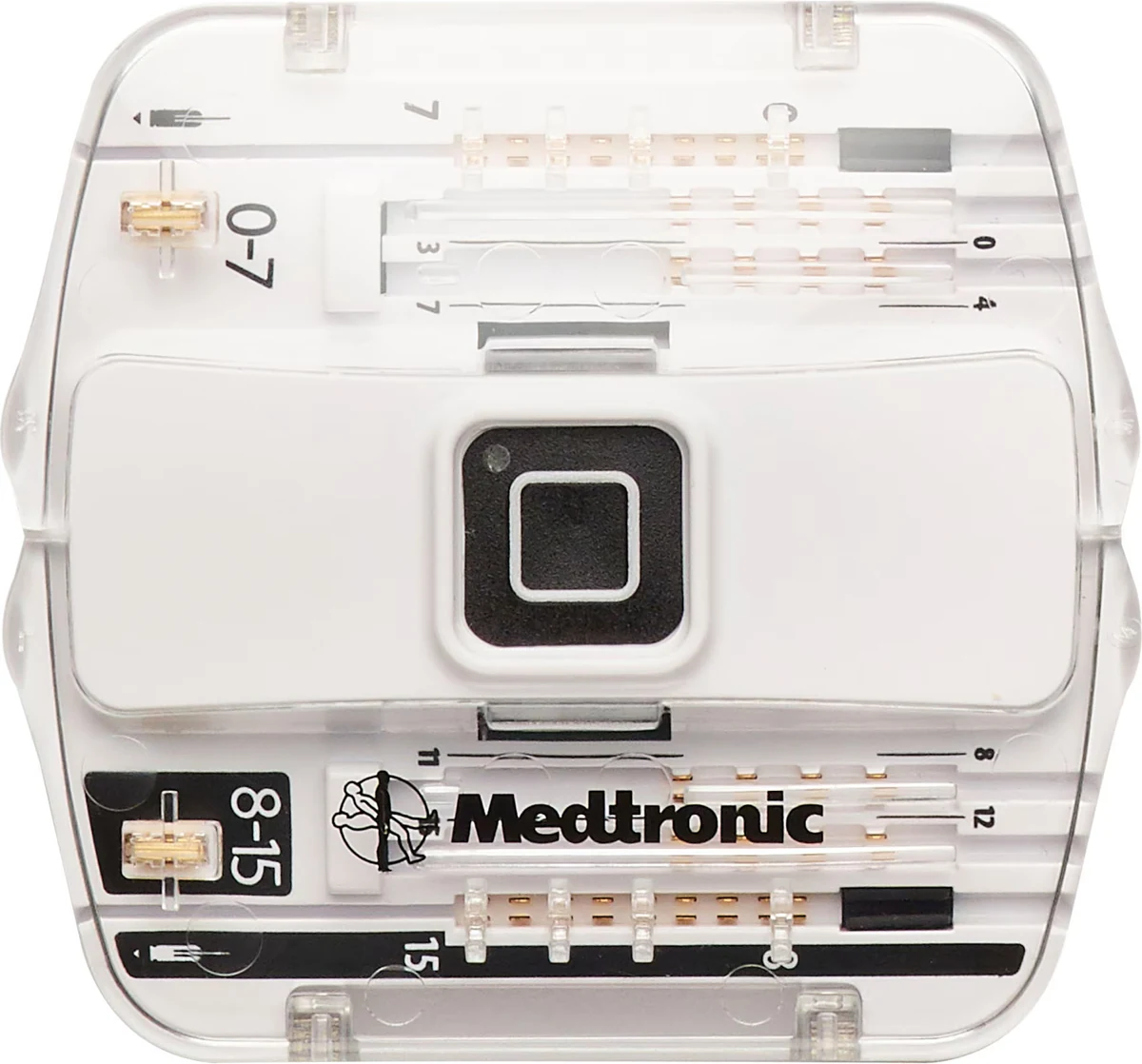
The WENS is external trial equipment used before a permanent generator is selected. Trial experience is one input into candidacy—not a guarantee of long-term results.
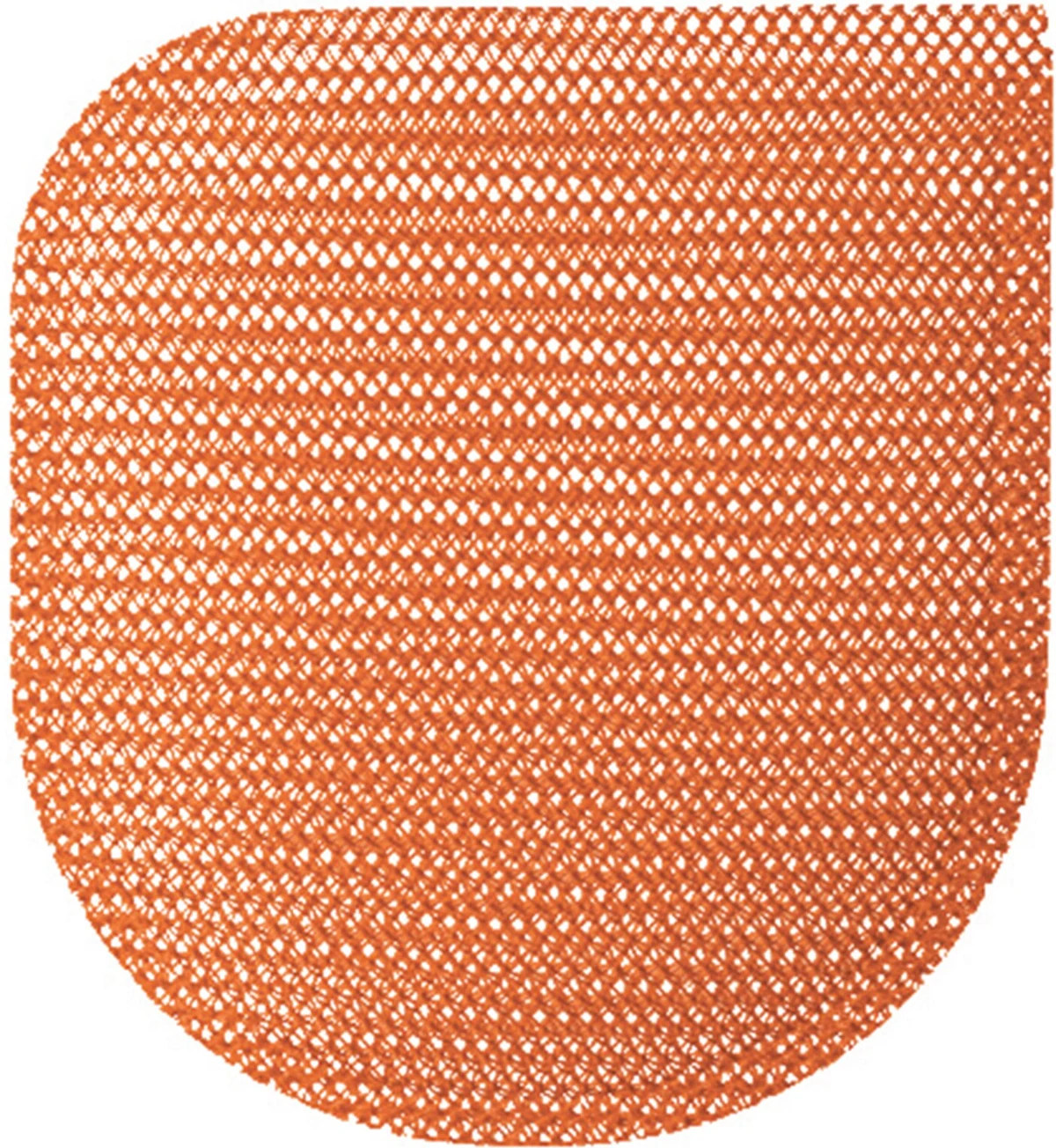
This manufacturer-supplied image shows the TYRX mesh envelope. Whether it is appropriate is a procedural decision governed by its current labeling and the individual implant context.
Product imagery supplied by Medtronic and used with written authorization.
Supplied by Medtronic
The links, videos and approved excerpts in this box were provided by Medtronic and are published with the company's written authorisation. Quoted copy is kept separate from our editorial descriptions.
The site owner reports written authorization from Medtronic to use this supplied digital media package. These locally hosted files remain manufacturer material, not independent clinical evidence. Videos do not replace current product labeling, instructions for use, or guidance from a treating clinician.
The Signature Technology
An evoked compound action potential, or ECAP, is the measurable electrical response that follows stimulation of neural tissue. It is not a direct measurement of pain. Inceptiv samples that response roughly 50 times per second and can adjust subsequent pulses to keep activation within the range programmed by the clinician. This is designed to compensate as the distance between the spinal cord and lead changes with posture, breathing, coughing, and movement.
How It Works
Leads are placed in the epidural space and connected to the implanted pulse generator, as with other spinal cord stimulation systems.
When closed-loop mode is enabled, the system measures the evoked spinal-cord response after a pulse, compares it with clinician-programmed parameters, and can adjust the next pulse within those limits.
Closed-loop is an available mode rather than a requirement. Inceptiv can also operate with fixed output and supports multiple therapy options, including DTM.
The Platforms
Each system in this family is built on the same underlying technology, but they differ in power source, size and intended use.
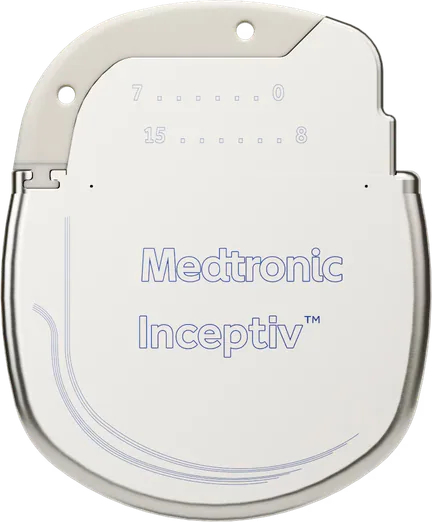
Closed-loop rechargeable SCS
A rechargeable system with optional ECAP-informed closed-loop stimulation. MRI eligibility is conditional on the implanted components, programming, and all current SureScan requirements being met.
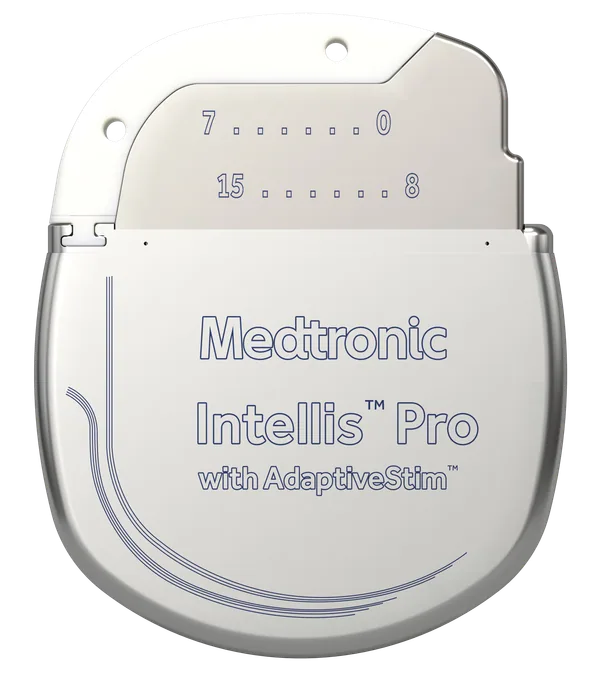
Rechargeable SCS
A rechargeable platform with a compact implant profile and activity-sensing tools intended to inform follow-up and programming.
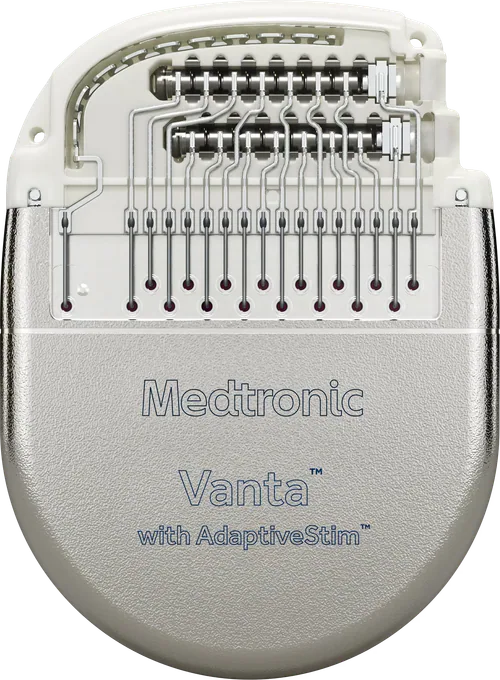
Recharge-free SCS
A primary-cell system for patients who would prefer not to manage a charging routine. Longevity varies with therapy settings and use.
The Evidence
Each study is given with its design, who was actually in it, what it found and where it falls short — then a link to the paper itself, so you can check any of it. Most device trials are manufacturer-funded; that is normal in this field and it is labelled here rather than glossed over.
3 of these entries link straight to the published paper on PubMed, where the abstract is free to read. Where a study was funded by the manufacturer or written with its employees, that is labelled on the card rather than left for you to find.
What it found
In the intent-to-treat group, 41 of 42 participants (97.6%) experienced less stimulation sensation with closed loop, and 37 of 42 (88.1%) preferred closed loop over open loop during the crossover comparison.
Limitations
A small, single-blind crossover study focused on stimulation sensation, preference, and ECAP variability rather than long-term pain relief or durability. Several authors were Medtronic employees.
Source
Will A, Fishman M, Schultz D, et al. Improvements in Therapy Experience With Evoked Compound Action Potential Controlled, Closed-Loop Spinal Cord Stimulation—Primary Outcome of the ECHO-MAC Randomized Clinical Trial. J Pain. 2024;25(11):104646..
Manufacturer-funded or manufacturer-authored
What it found
At three months, 80.1% of participants assessed with DTM achieved at least 50% low-back-pain relief, compared with 51.2% with traditional SCS. Reported benefit continued through 12 months.
Limitations
The trial was open label, and 34 of 128 randomized participants were not implanted. It was supported by Stimgenics, and authors reported multiple industry relationships.
Source
Fishman M, Cordner H, Justiz R, et al. Twelve-Month Results From Multicenter, Open-Label, Randomized Controlled Clinical Trial Comparing Differential Target Multiplexed Spinal Cord Stimulation and Traditional Spinal Cord Stimulation in Subjects With Chronic Intractable Back Pain and Leg Pain. Pain Pract. 2021;21(8):912–923..
Manufacturer-funded or manufacturer-authored
What it found
At three months, 93.5% of participants assessed with DTM achieved at least 50% low-back-pain relief, compared with 36.4% with conventional SCS. DTM responder rates at later assessments were reported between 88.1% and 90.5%.
Limitations
The study was unblinded, used a modified intention-to-treat analysis restricted to randomized trial completers, and allowed crossover at six months. Authors disclosed financial or professional relationships.
Source
White T, Justiz R, Almonte W, et al. Twelve-Month Results From a Randomized Controlled Trial Comparing Differential Target Multiplexed Spinal Cord Stimulation and Conventional Spinal Cord Stimulation in Subjects With Chronic Refractory Axial Low Back Pain Not Eligible for Spine Surgery. N Am Spine Soc J. 2024;19:100528..
Manufacturer-funded or manufacturer-authored
These are the studies specific to Medtronic. For the trials that shaped the whole field — and for how to read an industry-sponsored study fairly — see the clinical evidence library.
The Trade-offs
No system is the right answer for every patient. These are considerations to discuss with the clinician who knows your history.
Closed-loop sensing may reduce posture-related changes in stimulation, but it does not measure pain directly and does not guarantee a better outcome for every patient.
Inceptiv and Intellis Pro require charging; Vanta avoids charging but its service life depends on the programmed energy use.
MRI access is conditional, not automatic. Every implanted component and all scan conditions must satisfy the current SureScan labeling before an MRI.
Inceptiv received FDA approval in 2024 following CE Mark in August 2023. Intellis Pro and Vanta are FDA-approved spinal cord stimulation systems. Indications and MRI eligibility differ by system and configuration; current product labeling controls.
Indications, contraindications, warnings and MRI conditions are defined by the current labeling. Review the manufacturer's Instructions for Use at medtronic.com and discuss them with your physician.
Explore how candidacy is assessed, then discuss your pain pattern, imaging and prior treatments with a clinician. Device selection comes later.